Scout Advanced Play: Reading Rounds and Controlling the Tempo
By Dylan Wright • March 13, 2026
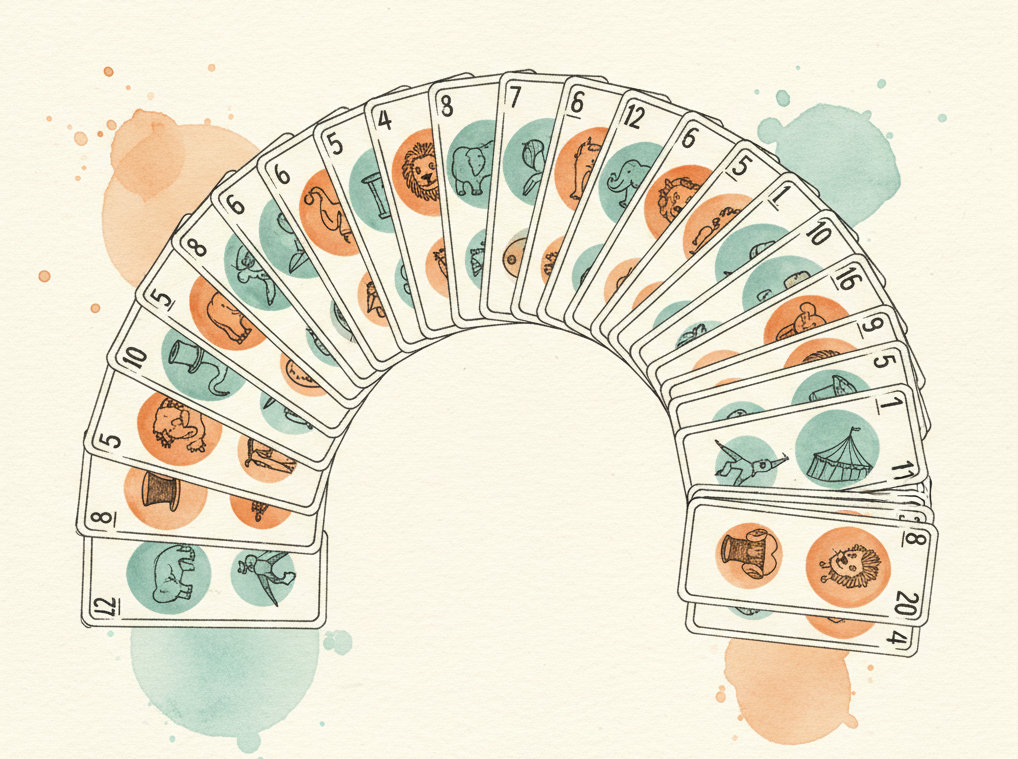
After you’ve played Scout enough to have solid fundamentals — you read your hand well, you sequence your plays, you use your Scout-and-Play at the right moments — the next layer of skill involves reading and controlling the round state rather than just reacting to it.
This is the advanced game: understanding what’s happening at the table level, not just in your hand, and using that understanding to create conditions favorable to you.
What Round Reading Means
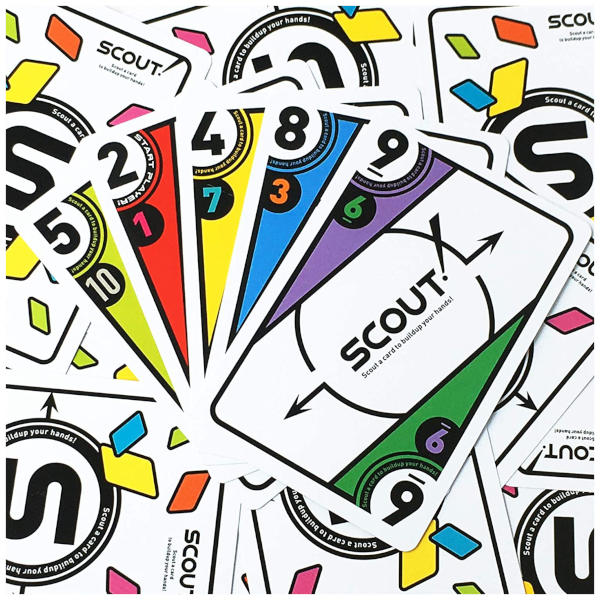
“Round reading” is the practice of continuously updating your model of the round’s current state — specifically, who is in a strong position, who is under pressure, and what the likely end-state of the round looks like from your current position.
At any moment in a Scout round, the relevant information includes:
- Your hand size and the quality of plays remaining in your sequence
- Your opponent’s hand size (visible) and inferred play quality (not visible but estimable)
- The size and type of the current challenge
- How many cards each player has collected this round
- Whether either player has used their Scout-and-Play token
Integrating all this information into a clear picture of the round state is what separates round readers from reactive players.
The Challenge Size Lever
One of the most underused tools in Scout is deliberate challenge sizing — choosing how large a play you make with the explicit intention of shaping the difficulty of the next challenge your opponent faces.
The oversized challenge play: Deliberately put out a challenge that’s larger than necessary to beat the current one. This doesn’t gain you anything extra in terms of cards collected (you still collect the beaten challenge), but it raises the bar for your opponent. If they can’t beat a 5-card challenge, they must Scout — costing them a turn, adding a card to their hand, and delaying their own plays.
The risk: you’ve used more cards than necessary to create the challenge, which may deplete your best remaining plays.
The undersized challenge play: Put out the minimum play that beats the current challenge. This preserves your better plays for later in the round. The downside: your opponent faces an easier bar and may have no trouble maintaining play flow.
The choice between these approaches depends on your read of your opponent’s hand. If you believe their hand is weak (low counts, prior poor plays), an oversized challenge exploits their weakness. If their hand is strong, oversizing may just give them an opportunity to make a play that collects your cards and controls the table.
The Stall Approach
There are moments in a Scout round when you don’t want the round to end quickly — specifically, when you’ve collected well and your opponent has collected better, but you have valuable plays remaining that you’d rather execute than see the round end.
In these moments, you can use the challenge size to stall: put up challenges that are slightly harder to beat, encouraging your opponent to Scout rather than play. Each Scout they make adds to their hand (good for your point comparison) and delays the round’s end.
The stall works when:
- You need more plays to even the collection count
- Your opponent is close to finishing but your hand still has strong plays
- The current challenge can be sized to be genuinely difficult to beat
The stall fails when your opponent has enough strong plays that they can beat any challenge you put up. Don’t stall against a strong hand — it just lets them collect while you wait.
Hand Depletion Math
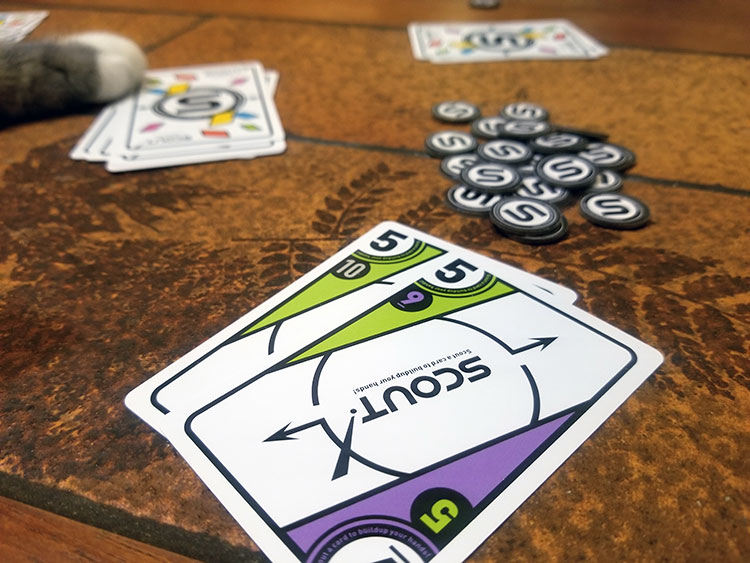
At any point in the round, you can calculate rough hand depletion math: how many turns until you’re likely to run out of plays given your remaining cards?
This calculation doesn’t need to be precise. The useful version is: “I have approximately 5 cards remaining with maybe 2 good plays. My opponent has 3 cards. They might finish in the next 2-3 turns.”
This rough calculation tells you whether you have time to execute all your remaining plays or whether you need to prioritize — playing your best sequences first before the round ends.
If the math suggests the round is ending in two or three turns and you have more plays than time, prioritize your biggest plays first. Getting your 4-card run on the table before the round ends is worth more than collecting from a small challenge.
Multi-Round Position Management
Scout is a multi-round game. The final score aggregates all rounds, which means that position management across rounds matters as much as winning individual rounds.
When you’re ahead: Play conservatively. Your primary goal is to minimize the opponent’s ability to close the gap. This means:
- Avoiding high-variance plays where you might collect less but they might collect more
- Keeping your round completion timing in your control — finish rounds when it favors your position
- Not taking big risks to increase your lead when maintaining it would suffice
When you’re behind: Accept that you need high-variance rounds. Look for situations where you can either finish first (earning the round-end bonus and denying your opponent’s hand penalty benefit) or force your opponent into large hand penalties. Conservative play when behind doesn’t close gaps fast enough.
The mid-game round: When scores are close, the current round is decisive. Play with maximum attention to your immediate position. Don’t bank on future rounds to compensate for what happens now.
Counting Opponents’ Remaining Plays
Experienced Scout players try to estimate their opponent’s play potential, not just their card count.
If your opponent has 4 cards left but started with 12 and has played mostly sets of 2 so far, they likely have 2 remaining sets of 2 — low play value. If they’ve played runs of 4 so far and have 4 cards left, they might have one more strong run — significant play value.
This estimation is imperfect — you can’t see their hand — but the patterns of what someone has played often predict what they still hold. Sets-heavy players tend to hold sets; run-heavy players tend to hold runs (because the fixed hand order tends to cluster similar values).
Using this estimation, you can decide whether putting up a large challenge (to block their strong remaining run) or a smaller challenge (to bait a weak set play from their final cards) is the better approach.
The Execution State
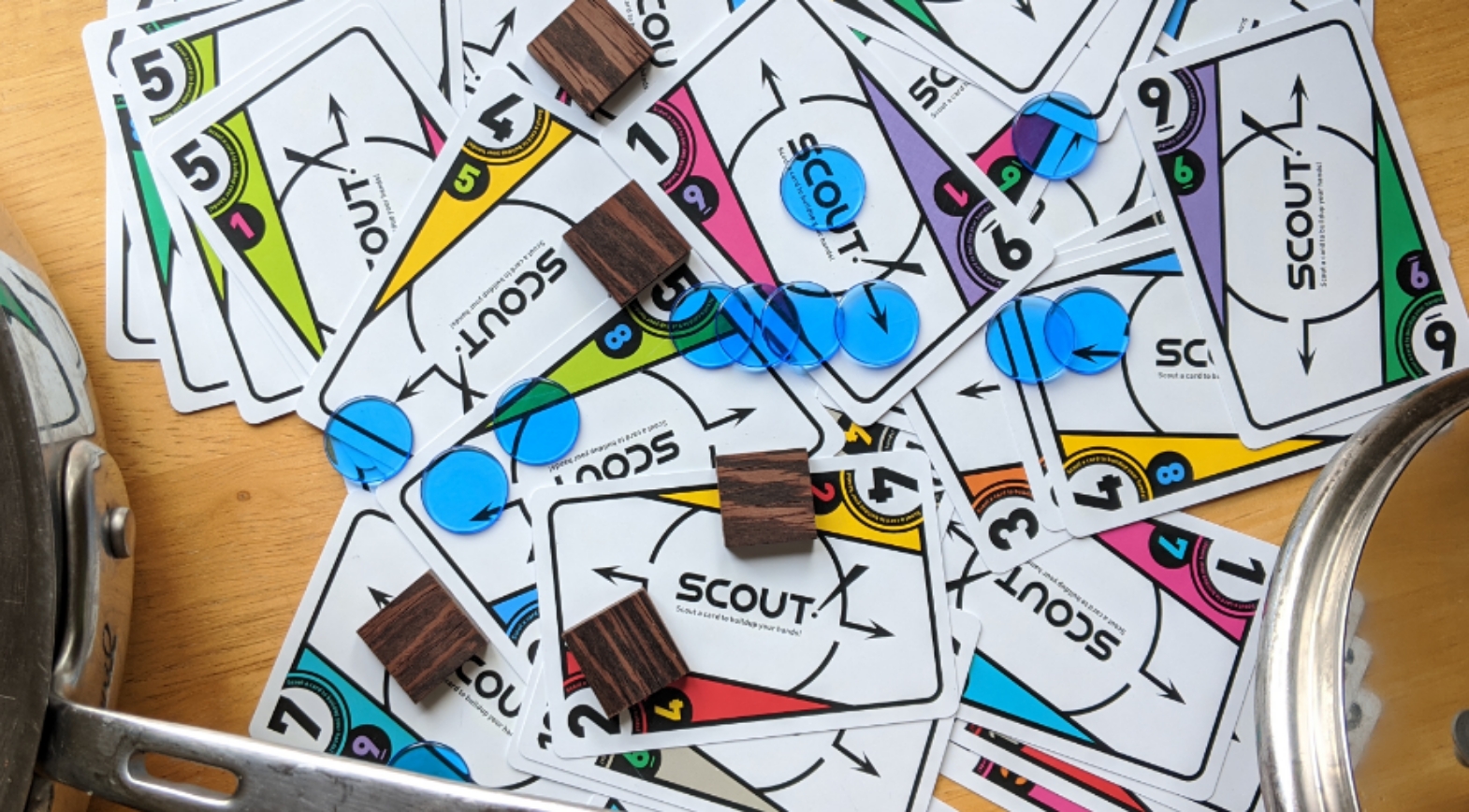
Everything in this guide is in service of arriving at what I call the execution state: the point in a round where you’ve read the situation clearly enough that you can play with confidence rather than uncertainty.
You know roughly what your opponent has. You know how many turns the round has left. You know which of your remaining plays you should lead with and which you’re saving. You’re not just responding to each challenge as it comes — you’re shaping the round toward the outcome you want.
Getting to this execution state consistently is what advanced Scout play looks like. It takes time, repetition, and deliberate attention to the table as a whole rather than just your own hand.
But when you get there, Scout becomes a different game.